BIBLE WARDROBES AND THE CHRISTIAN WOMAN’S SPIRITUAL CLOTHING – Lesson 4: A LINEN EPHOD

Lesson 4: A LINEN EPHOD

“And David danced before the LORD with all his might; and David was girded with a linen ephod” (2 Sam. 6:14).

Some believe David sinned by wearing the linen ephod in his worship. Although the linen ephod is primarily associated with the high priests‟ garments, it was by no means limited to the high priest.

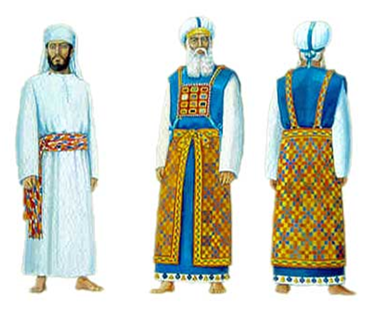
The elaborately embroidered ephod was a garment which the Jewish high priest was required to wear when officially engaged in religious duties. (Exod. 28:4) Suspended from the shoulders, it covered both back and front like a tunic. On the shoulders were two onyx stones on which the names of the 12 tribes of Israel were engraved (Exod. 28:9-1039:6-7). Worn as an outer vestment, the ephod was held in at the waist by a twined linen girdle of gold, blue, purple, and scarlet. The breastplate with the Urim and Thummim was on top, held by golden chains and rings (Exod. 28:25-2839:19-21). The high priest was adorned in this fashion to symbolize the presence of God with his people.

Samuel wore an ephod (1 Sam. 2:18), and all of the priests with Ahimilech (the high priest at the time) wore ephods (1 Sam. 22:18) but not the elaborate garments of the high priests. There is no question but that the plain linen ephod was at least closely associated with the priesthood, but apparently the embroidered ephod was limited to the high priest. Samuel was a judge, a seer (1 Sam. 8:19) and a prophet, probably a priest, although the scriptures do not specify. Samuel was a descendent of Levi through Kohath (1 Chro. 6:38), the same tribe through which Aaron was descended (1 Chr. 6:1-3). His father was an Ephrathite, because he lived in Mt. Ephraim, but not because he was descended from the tribe of Ephraim. Hannah may have been of the tribe of Levi, but there is no record of it. Concerning Samuel’s ancestry, see 1 Samuel 7:9. “And Samuel took a sucking lamb and offered it for a burnt offering wholly unto the Lord: and Samuel cried unto the Lord for Israel; and the Lord heard him.” We know that King Saul was condemned for offering a sacrifice which only the priests and Levites could offer. Samuel was at least a Levite (if not a priest) or he would have been condemned along with King Saul. In any case, Samuel wore an ephod showing it was not limited to the high priest or even to the priests. David was a prophet (Acts 2:29-30) just as Samuel was a prophet, and thus authorized as much as Samuel to wear the ephod.

In 2 Samuel 6 we see David wearing a linen ephod as he is bringing the ark back to Jerusalem. It appears that Psalm 132 may be associated with the events of this chapter. The point we need to take from his wearing the ephod is that he was doing it “to the Lord” and not to men. He had removed his royal garments and was traveling among the priests who were bringing the Ark of the Covenant back to Jerusalem. He commanded that animals be sacrificed every few feet as they went—obviously seeking the favor of the Almighty. His intent was to repair the breach that had been left between Israel and God ever since the Philistines had captured the ark during Eli’s time. Deeply dedicated to pleasing his Creator, King David worshiped and praised Him as he went that day. His dancing was to the Lord and not to men and his wearing the ephod was for that purpose as well.

After Uzzah’s death, David must have searched God’s laws diligently to understand why the Lord was not pleased the last time they tried to bring back the ark, and now he is making sure everything is according to law. Can we also be equally concerned about our worship to the Lord that we do what is pleasing in His sight? Are we concerned with our actions and even our clothing that we not bring shame but glory to the God who created us?

QUESTIONS:

  1. Using an ordinary dictionary, find out how linen is made.
  2. Using  28:6-14Exod. 28:31-35and Exod. 25:7 as your sources, describe the ephod in detail. Be sure to give the purpose of the ephod.
  3. For what did Abiathar use the ephod (1 Sam. 30:7-9)?
  4. How many people wore the ephod all at one time (1 Sam. 22:18)?
  5. For what did Micah use the ephod (Judges 17:5)?
  6. What is said about Samuel wearing an ephod?
  7. How did Gideon’s ephod cause the people to sin? Tell what happened to it (Judges 8:24-27).
  8. Using a Strong’s Concordance search the scriptures to find out more about the ark and the reasons it was taken by the Philistines.
  9. Read Psalm 132 comparing it to events in 2 Samuel 6.
  10. What happened the first time David tried to bring the ark back to Jerusalem?
  11. What was the prophecy concerning the absence of the Ephod from Israel ( 3:4)?
  12. Many people say it really does not matter what we wear when we worship God. How should we answer that statement

-Beth Johnson

WARDROBES OF THE BIBLE AND THE CHRISTIAN WOMAN’S SPIRITUAL CLOTHING Lesson 3 THE POLYGAMIST’S WIFE’S WARDROBE

Lesson 3 THE POLYGAMIST’S WIFE’S WARDROBE

Modern Polygamist Family

“If he take him another wife; her food, her raiment, and her duty of marriage, shall he not diminish” (Exod. 21:10).

In the New Testament, there is no provision for multiple wife families; however polygamy was practiced during Old Testament times–between Genesis and Malachi.

Christian women today can only imagine what it might be like to be a minor wife or a concubine. First of all, poverty would be the driving factor in being sold as a slave-cum-wife to some man who wanted more than one. The choice would not be theirs, but there was protection for Hebrew women even under the Old Testament Law. A Hebrew (man or woman) might be sold as a bond servant in consequence either of debt (Lev. 25:39) or of the commission of theft (Exod. 22:3). However, his servitude could not be enforced for more than six full years. If a Hebrew male servant were sold, he had to be released again after 6 years unless it was his choice to remain a slave (Exod. 21:2).

A Hebrew woman was not to be treated the same way. She could not be sent out again after the husband had “humbled” her (Deut. 21:14Ex 21:7). She was to remain his wife even if he did not like her. This gave Hebrew women a measure of protection from being sold to first one stranger and another or left without food, clothing or the “duty of marriage.” See Deuteronomy 15:17 also. Any wardrobe her husband would provide might be less than wonderful, but her body would be covered and she would have food to satisfy her basic needs (similar to 1 Tim. 6:8).

The Lord has a similar law in the New Testament era. The Holy Spirit, through Paul, speaks of the duty of marriage for Christians today. When we make our vows of marriage we do not own our own bodies anymore (1 Cor. 7:1-5). Our bodies belong to our mates. Similarly, in the OT, because of this basic principle or “duty in marriage,” the Hebrew polygamist could not by law refuse to give the wife her rights. Only if he found something “unseemly” in her was he able to send her back to her father. Even then, if her father could prove she had been a virgin when he sold her, she could not be sent away or shamed publicly.

There are many examples of concubines being part of a multi-wife family under the Mosaic Law. The accounts show such customs were both authorized (2 Sam. 12:8) and practiced (Gen. 21:9-10Gen. 37:2Judges 19:3-5). Other accounts dealing with concubines are found in multiple scriptures (Gen. 22:20-24Gen. 25:1Gen. 30:3-5Gen. 35:22Gen. 36:121 Chro. 1:32; 1 Chro. 2:42-50 and 1 Chro.7:14). As we study these passages, we are able to see God‟s protection of women in the strict laws made for concubines (Exod. 21:7-11Lev. 19:20-22Deut. 21:10-14). Even though their children could not necessarily inherit from their master (Gen. 15:4Gen. 21:10Gen. 25:1-61 Ch 1:32-33), the Hebrew women were never to be left destitute of food, clothing and the duty of marriage.

What a blessing Christian women have under the Law of Christ! We are treasured and honored as the one-and-only wife, which should make our responsibility and our dedication to our husbands even greater. We should not expect the finest clothing or jewels (1 Tim. 6:8), but be ever grateful that the Lord has given us first place under our husbands in our marriage relationships. Then we have that wonderful hope of a place in eternity as the bride of Christ. What a beautiful concept that becomes, as we consider our place in eternity.

QUESTIONS:

  1. What was/is a polygamist?
  2. Was polygamy a sin for the man under the Mosaic Law?
  3. When could a man send a wife back to her father?
  4. When could he send her out to be another man’s wife? (Deut. 24:1-4)
  5. When could a father sue the daughter’s husband for damages ( Deut. 22:13-21)?
  6. What three things did every husband have to provide for his wife whether or not he liked her?
  7. Could a Hebrew female slave be treated the same way a Hebrew male slave was treated?  Why not?
  8. What material blessings does God promise Christian men and women today?
  9. If someone asks us for financial help, what should be our consideration (1 Tim. 6:8)?
  10. With what should everyone be content (Luke 3:14; 4:11Heb. 13:51 Tim. 6:8)?

DOPPELGÄNGER

doppelgänger – noun

Definition of doppelgänger

1
a: double sense 2a said she had seen his doppelgänger
b: alter ego sense 1b
c: a person who has the same name as another

2: a ghostly counterpart (see counterpart sense

3 a) of a living person

MY MOTHER myself

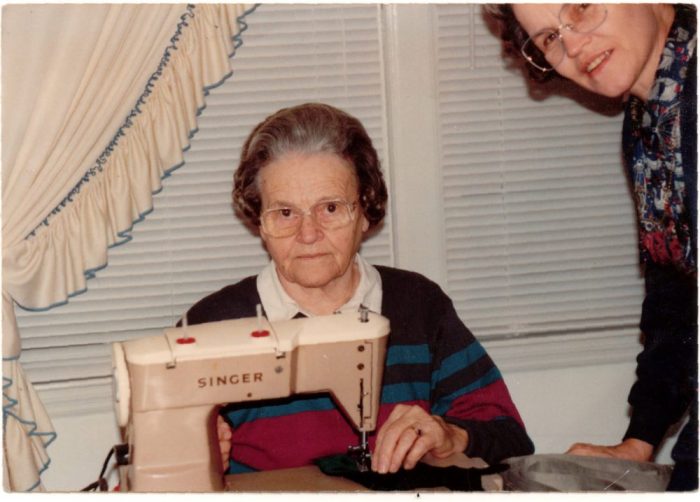
This photo  was made just a few months before my mother completed her 80th year.  Now I am nearing 80 and appear much older than she seemed here.

One might wonder how such a topic could be used in a daily Bible study; of what value is it?  Would Christians be moved to search the subject in a paranormal sense?[i]  We often speak casually about some other person we meet being our double, our twin, maybe even our second-self, but do we really mean that?  Why is appearance and behavior so important?  If a child bears my name, am I more concerned with how they move and speak?

Continue reading DOPPELGÄNGER

BIBLE WARDROBES AND THE CHRISTIAN WOMAN’S SPIRITUAL CLOTHING Lesson 2: OLD CLOTHES AND MOLDY BREAD

Lesson 2: OLD CLOTHES AND MOLDY BREAD

During the Israelite conquest of Canaan, Gibeonite ambassadors used falsehood and deception to lead Joshua and the elders of Israel to believe that they came from a distant region, when in fact they lived in the immediate vicinity of Canaan. In order to save themselves from extinction by the armies of Israel, the Gibeonites craftily deceived Joshua and the leaders of Israelites into agreeing to establish a treaty to let them live (Josh. 9:13-16). By using old clothes and moldy bread, the ambassadors misrepresented the distance they had traveled from their habitat (Josh. 9:3-6). Without asking counsel of the Lord and following their own judgment, the leaders of Israel made a treaty with them. Assuming these men were telling the truth about where they lived, they put confidence in the Gibeonites‟ claim, partook of their victuals, made an alliance with them and ultimately found themselves betrayed (Josh. 9:13-15).
Kirjath-Jearim, also called Baalah, was one of the four cities of the Gibeonites. The inhabitants of Kirjath-Jearim were not struck down on account of the covenant made, but they were put under servitude (Joshua 9:17 with 9:3-27). Joshua and the elders of Israel behaved magnanimously in their response to the
‟ deception, and rather than kill them, they let them become servants to hew wood and draw water for the house of the Lord forever (Josh. 9:22-27).

The Gibeonites seem to have had a law or a government somewhat like the Israelites had under the Mosaic Law (Josh. 9:11). This would indicate the people had some measure of respect for the Lord. Six kings made war upon the Gibeonites and were defeated and killed. Notice Joshua at Gibeon (Josh. 10). Regarding the kings who struck them, the account tells that the “…the LORD cast down great stones from heaven upon them unto Azekah, and they (the six kings and their armies) died. “They were more which died with hailstones than they whom the children of Israel slew with the sword.”

Several other things, both good and bad, may be known about the Gibeonite nation. One is that the tribe of Benjamin did not avenge the crime of the Gibeonites against the Levite’s concubine, and a war followed (Judg. 19). Ismaiah was a Gibeonite who joined David at Ziklag (1 Chr. 12:4) and was one of David’s mighty men. King Saul killed the Gibeonites; a crime avenged by the death of seven of his sons (2 Sam. 21:1-9). As a just retribution for Saul’s crime, it was King David who consigned seven sons of Saul to the Gibeonites to be killed to atone for Saul’s persecution of them (2 Sam. 21:1-14). Mephibosheth was a son of Saul by Rizpah, whom David did not surrender to be killed (2 Sam. 21:8-9). Hananiah was a Gibeonite prophet who uttered false prophecies in the temple during the reign of Zedekiah (Jer. 28). Pay particular attention to Hananiah’s sin and the resulting punishment by God in verses 10-16. Melatiah was a Gibeonite who assisted in repairing the wall of Jerusalem (Neh. 3:7).

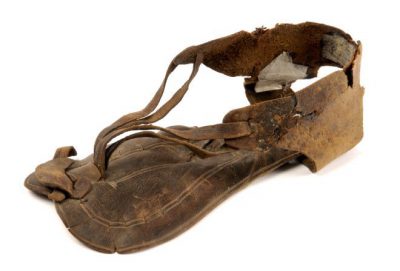
“And when the inhabitants of Gibeon heard what Joshua had done unto Jericho and to Ai, They did work wilily, and went and made as if they had been ambassadors, and took old sacks upon their asses, and wine bottles, old, and rent, and bound up; And old shoes and clouted upon their feet, and old garments upon them; and all the bread of their provision was dry and moldy” (Joshua 9:3-5).

The Gibeonites figure notably throughout the Israelite history with some good and some evil results. The Shechemites and Gibeonites were Hivite families of Genesis 34:2Josh. 9:1711:19). Although they had some respectable men in their nation, their presence was ever a reminder of the error made in allowing them to dwell among them.

QUESTIONS:

1.   As a foundation for this study, discuss two commands that had been given to the Israelites to govern such decisions:

·      Utterly destroy the inhabitants of Canaan (Deut. 7:1-5).

·      Do not swear falsely [i.e. keep your vows] (Lev. 19:12).

2.   What deceit did the Gibeonites use to deceive Joshua and the Children of Israel (Josh. 9:3-5)? Why?

3.   How were they received by the princes of Israel (Josh. 9:14-19)?

4.   Give two reasons why there was a conflict between the princes of the congregation and the people. (Josh. 9:14-15)?

5.   It is obvious from reading the account that the Gibeonites lied and purposefully deceived the leaders of Israel. How could Joshua and the elders have known what to do (Deut. 7:1-5)?

6.   Once the Israelites realized they had been deceived into disobeying the command of God, what other dilemma did they face (Josh. 9:19)? Why could they not go back on their word and break the covenant (Lev. 19:12)?

RESEARCH QUESTION:

7.   Under the Mosaic Law, all vows, covenants, leagues, treaties and promises were viewed as binding. Search the following scriptures to see just how important these were before God: Leviticus 19:12Deut. 23:22Deut. 23:21-23Num. 30:1-2Num. 30:12-14Num. 30:15Prov. 20:25Eccl. 5:1-6Gal. 3:15 and Prov. 19:2.

8.   Why was Joshua forced to make peace with the Gibeonites (Deut. 20:10-18)?

9.   Who else worked wilily to save himself and his nation (1 Kings 20:29-37)? To get the whole context, read all of 1 Kings, chapter 20.

10.      What Gentile lady worked wilily to secure safety from being destroyed by the Israelite armies (Josh 2:9-14)?

11.      Did any city or nation make peace with the children of Israel (Josh. 11:19)?

12.      How do we know that God was not pleased with what King Saul did against the Gibeonites (2 Sam. 21:1-9)? What did King David do to make peace with them?

13.      How does Jeremiah 18:7-8 apply to this situation?

14.      Using the account in 1 Kings 13:7-19, tell how the young prophet should have reacted to the lie told him by the old prophet. What appears to have caused him to fail the test to be faithful?

15.      What special things did God provide under the Law of Moses to help the Israelite leaders to make righteous judgments (Exod. 28:30Num. 27:211 Sam. 23:9-121 Sam. 30:7-82 Sam. 2:12 Sam. 5:19).

16.      Discuss what kinds of decisions they made in each case. Could Joshua have used these methods?

17.      How did the sincere people of Israel seek to gain God’s favor and obtain a favorable answer to their needs (Ezra 8:21)?

18.      What transgression did King Saul commit against the Lord and why did he die (1 Chr. 10:13-14)? Was God happy when His rebellious children did not ask counsel of the Him (Isa. 30:1-2)? What was their sin?

19.      Today, in the NT, how are covenant breakers described (Rom. 1:28-32)? How will obeying James 1:19 help us to avoid this sin?

20.      What is Jesus’ admonition (Matt. 5:33-37)?

21.      What other principles can be used to govern our decisions (Prov. 3:5-62027Hosea 4:6)?

22.      Why did Paul, with the apostles and elders, ask counsel of the Lord (Acts 15:1-213-29)?

23.      What must we remember as we make decisions about things people teach in religion (Gal. 1:8-91 Cor. 2:4-5Phil. 4:6 and Eph 6:18)?

24.      Consider the command not to be unequally yoked with unbelievers or to make friends with them (2 Cor. 6:141 Cor. 15:33). See also: 1 Kings 11 for examples of how Solomon violated this principle. If we make a covenant of marriage with one who has deceived us, do we still have to honor our vows?

25.      **What if someone deceives us? How can we know what we should do? Remember the clearly stated problem in Joshua 9:14. “…asked not counsel at the mouth of the LORD.” We need to be very careful not to be deceived, by knowing well and seeking out the counsel of the Lord; otherwise we may have to bear some unpleasant consequences.

–Beth Johnson

BIBLE WARDROBES AND THE CHRISTIAN WOMAN’S SPIRITUAL CLOTHING – Lesson 1 THE ABANDONED COAT

“And it came to pass about this time, that Joseph went into the house to do his business; and there was none of the men of the house there within. And she caught him by his garment, saying, Lie with me: and he left his garment in her hand, and fled, and got him out. And it came to pass, when she saw that he had left his garment in her hand, and was fled forth, That she called unto the men of her house, and spake unto them, saying, See, he hath brought in an Hebrew unto us to mock us; he came in unto me to lie with me, and I cried with a loud voice:” (Gen. 39:11-14).

When Potiphar’s wife took hold of Joseph to force him to lie with her, he merely abandoned his cloak and ran.  It was only right that he should.  Potiphar’s wife belonged to Potiphar and not to Joseph, so when she approached him, it was nothing short of enticing him to commit adultery.  Falling to that temptation would not only have been a breach of faithfulness against Potiphar but against the God of Heaven Himself.  Notice specifically what Joseph says:  There is none greater in this house than I; neither hath he kept back any thing from me but thee, because thou art his wife: how then can I do this great wickedness, and sin against God? (Gen. 39:9).

Like the harlot in Proverbs 7:10, Potiphar’s wife had laid a trap for Joseph and thought to take him by her trickery.  As he went about serving her husband every day, his youth and vigor must have appealed to her, and it appears she had arranged for the other servants in the house leave, in order to make his temptation to sin even greater.  Perhaps she painted herself like Jezebel or she may even have worn lewd clothing for appeal.  We can assume that she did not have the reputation for being a common harlot, because she was a married woman of some status.  However, we see she was subtle of heart, in stark contrast to the purity of heart and modesty, which becomes women professing godliness (1 Tim. 2:10).

Notice how the temptation to sin came to Joseph.  It was not presented to him as a hideous, fire-breathing monster, but as something soft and enticing—something perhaps that he might do and nobody would ever know.  The Devil would never win any battles for our souls if he made sin look like what it really is.  Our Heavenly Father describes the Devil as going about like a roaring lion seeking whom he may devour (1 Pet. 5:8), but the ones who are tempted usually do not see him like that because he crouches secretly and pounces suddenly as the deed is done.  What the unwary person may see is Satan disguised as an angel of light, thus increasing the temptation (2 Cor. 11:14-15).

God offers many, many alternatives to sin.  One method of resisting temptation is to flee.  “There hath no temptation taken you but such as is common to man: but God is faithful, who will not suffer you to be tempted above that ye are able; but will with the temptation also make a way to escape, that ye may be able to bear it” (1 Cor. 10:13).  We are told to “Flee fornication. Every sin that a man doeth is without the body; but he that committeth fornication sinneth against his own body” (1 Cor. 6:18).  Again, we are told to “Flee also youthful lusts: but follow righteousness, faith, charity, peace, with them that call on the Lord out of a pure heart” (2 Tim. 2:22).  Finally, we know that we are to “Submit yourselves therefore to God. Resist the devil, and he will flee from you” (James 4:7).

Joseph left his cloak and ran.  Viewing his action from the eyes of the world, that may have seemed cowardly, but in the eyes of God he behaved admirably.  Joseph was righteous and suffered for it (1 Pet. 2:20), but he was blessed by God for his faithfulness.


QUESTIONS:

  1. Joseph was the first child of ________ ( 22:24) and his father’s ____________ (adjective) son (Gen. 37:31).
  2. Approximately how old was Joseph when his brothers sold him into Egyptian bondage?
  3. Who bought him first?
  4. How did he happen to become a servant to Potiphar?
  5. Who was Potiphar? What was his position under King Pharaoh?
  6. Why would being the most trusted servant in his household be such a good position?
  7. What happened to Joseph when he refused to commit adultery with Potiphar’s wife?
  8. How did she convince her husband that he had tried to molest her?
  9. After Joseph was sent to prison, what happened to him there?

RESEARCH QUESTION:

  1. We see by Joseph’s example that we may flee temptation; however, there are other ways to overcome. Give as many ways as you can find in scripture that show us how to win the battle against sin. You might consider these examples to begin your study: Psalm 1:1—not even walking, standing or sitting near wrong or perhaps Psalm 119:11—putting the word in our hearts as protection.  Suggested search words might include: temptation, sin not, sin against, overcome, stand, fight (note the battle language).  These are only a few of many ideas to help your research.