BIBLE WARDROBES AND THE CHRISTIAN WOMAN’S SPIRITUAL CLOTHING Lesson 2: OLD CLOTHES AND MOLDY BREAD

Lesson 2: OLD CLOTHES AND MOLDY BREAD

During the Israelite conquest of Canaan, Gibeonite ambassadors used falsehood and deception to lead Joshua and the elders of Israel to believe that they came from a distant region, when in fact they lived in the immediate vicinity of Canaan. In order to save themselves from extinction by the armies of Israel, the Gibeonites craftily deceived Joshua and the leaders of Israelites into agreeing to establish a treaty to let them live (Josh. 9:13-16). By using old clothes and moldy bread, the ambassadors misrepresented the distance they had traveled from their habitat (Josh. 9:3-6). Without asking counsel of the Lord and following their own judgment, the leaders of Israel made a treaty with them. Assuming these men were telling the truth about where they lived, they put confidence in the Gibeonites‟ claim, partook of their victuals, made an alliance with them and ultimately found themselves betrayed (Josh. 9:13-15).
Kirjath-Jearim, also called Baalah, was one of the four cities of the Gibeonites. The inhabitants of Kirjath-Jearim were not struck down on account of the covenant made, but they were put under servitude (Joshua 9:17 with 9:3-27). Joshua and the elders of Israel behaved magnanimously in their response to the
‟ deception, and rather than kill them, they let them become servants to hew wood and draw water for the house of the Lord forever (Josh. 9:22-27).

The Gibeonites seem to have had a law or a government somewhat like the Israelites had under the Mosaic Law (Josh. 9:11). This would indicate the people had some measure of respect for the Lord. Six kings made war upon the Gibeonites and were defeated and killed. Notice Joshua at Gibeon (Josh. 10). Regarding the kings who struck them, the account tells that the “…the LORD cast down great stones from heaven upon them unto Azekah, and they (the six kings and their armies) died. “They were more which died with hailstones than they whom the children of Israel slew with the sword.”

Several other things, both good and bad, may be known about the Gibeonite nation. One is that the tribe of Benjamin did not avenge the crime of the Gibeonites against the Levite’s concubine, and a war followed (Judg. 19). Ismaiah was a Gibeonite who joined David at Ziklag (1 Chr. 12:4) and was one of David’s mighty men. King Saul killed the Gibeonites; a crime avenged by the death of seven of his sons (2 Sam. 21:1-9). As a just retribution for Saul’s crime, it was King David who consigned seven sons of Saul to the Gibeonites to be killed to atone for Saul’s persecution of them (2 Sam. 21:1-14). Mephibosheth was a son of Saul by Rizpah, whom David did not surrender to be killed (2 Sam. 21:8-9). Hananiah was a Gibeonite prophet who uttered false prophecies in the temple during the reign of Zedekiah (Jer. 28). Pay particular attention to Hananiah’s sin and the resulting punishment by God in verses 10-16. Melatiah was a Gibeonite who assisted in repairing the wall of Jerusalem (Neh. 3:7).

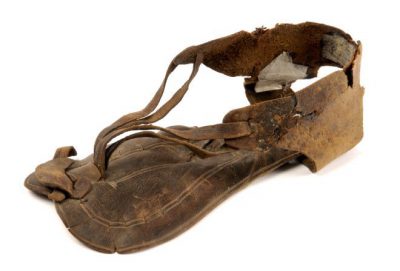
“And when the inhabitants of Gibeon heard what Joshua had done unto Jericho and to Ai, They did work wilily, and went and made as if they had been ambassadors, and took old sacks upon their asses, and wine bottles, old, and rent, and bound up; And old shoes and clouted upon their feet, and old garments upon them; and all the bread of their provision was dry and moldy” (Joshua 9:3-5).

The Gibeonites figure notably throughout the Israelite history with some good and some evil results. The Shechemites and Gibeonites were Hivite families of Genesis 34:2Josh. 9:1711:19). Although they had some respectable men in their nation, their presence was ever a reminder of the error made in allowing them to dwell among them.

QUESTIONS:

1.   As a foundation for this study, discuss two commands that had been given to the Israelites to govern such decisions:

·      Utterly destroy the inhabitants of Canaan (Deut. 7:1-5).

·      Do not swear falsely [i.e. keep your vows] (Lev. 19:12).

2.   What deceit did the Gibeonites use to deceive Joshua and the Children of Israel (Josh. 9:3-5)? Why?

3.   How were they received by the princes of Israel (Josh. 9:14-19)?

4.   Give two reasons why there was a conflict between the princes of the congregation and the people. (Josh. 9:14-15)?

5.   It is obvious from reading the account that the Gibeonites lied and purposefully deceived the leaders of Israel. How could Joshua and the elders have known what to do (Deut. 7:1-5)?

6.   Once the Israelites realized they had been deceived into disobeying the command of God, what other dilemma did they face (Josh. 9:19)? Why could they not go back on their word and break the covenant (Lev. 19:12)?

RESEARCH QUESTION:

7.   Under the Mosaic Law, all vows, covenants, leagues, treaties and promises were viewed as binding. Search the following scriptures to see just how important these were before God: Leviticus 19:12Deut. 23:22Deut. 23:21-23Num. 30:1-2Num. 30:12-14Num. 30:15Prov. 20:25Eccl. 5:1-6Gal. 3:15 and Prov. 19:2.

8.   Why was Joshua forced to make peace with the Gibeonites (Deut. 20:10-18)?

9.   Who else worked wilily to save himself and his nation (1 Kings 20:29-37)? To get the whole context, read all of 1 Kings, chapter 20.

10.      What Gentile lady worked wilily to secure safety from being destroyed by the Israelite armies (Josh 2:9-14)?

11.      Did any city or nation make peace with the children of Israel (Josh. 11:19)?

12.      How do we know that God was not pleased with what King Saul did against the Gibeonites (2 Sam. 21:1-9)? What did King David do to make peace with them?

13.      How does Jeremiah 18:7-8 apply to this situation?

14.      Using the account in 1 Kings 13:7-19, tell how the young prophet should have reacted to the lie told him by the old prophet. What appears to have caused him to fail the test to be faithful?

15.      What special things did God provide under the Law of Moses to help the Israelite leaders to make righteous judgments (Exod. 28:30Num. 27:211 Sam. 23:9-121 Sam. 30:7-82 Sam. 2:12 Sam. 5:19).

16.      Discuss what kinds of decisions they made in each case. Could Joshua have used these methods?

17.      How did the sincere people of Israel seek to gain God’s favor and obtain a favorable answer to their needs (Ezra 8:21)?

18.      What transgression did King Saul commit against the Lord and why did he die (1 Chr. 10:13-14)? Was God happy when His rebellious children did not ask counsel of the Him (Isa. 30:1-2)? What was their sin?

19.      Today, in the NT, how are covenant breakers described (Rom. 1:28-32)? How will obeying James 1:19 help us to avoid this sin?

20.      What is Jesus’ admonition (Matt. 5:33-37)?

21.      What other principles can be used to govern our decisions (Prov. 3:5-62027Hosea 4:6)?

22.      Why did Paul, with the apostles and elders, ask counsel of the Lord (Acts 15:1-213-29)?

23.      What must we remember as we make decisions about things people teach in religion (Gal. 1:8-91 Cor. 2:4-5Phil. 4:6 and Eph 6:18)?

24.      Consider the command not to be unequally yoked with unbelievers or to make friends with them (2 Cor. 6:141 Cor. 15:33). See also: 1 Kings 11 for examples of how Solomon violated this principle. If we make a covenant of marriage with one who has deceived us, do we still have to honor our vows?

25.      **What if someone deceives us? How can we know what we should do? Remember the clearly stated problem in Joshua 9:14. “…asked not counsel at the mouth of the LORD.” We need to be very careful not to be deceived, by knowing well and seeking out the counsel of the Lord; otherwise we may have to bear some unpleasant consequences.

–Beth Johnson

BIBLE WARDROBES AND THE CHRISTIAN WOMAN’S SPIRITUAL CLOTHING – Lesson 1 THE ABANDONED COAT

“And it came to pass about this time, that Joseph went into the house to do his business; and there was none of the men of the house there within. And she caught him by his garment, saying, Lie with me: and he left his garment in her hand, and fled, and got him out. And it came to pass, when she saw that he had left his garment in her hand, and was fled forth, That she called unto the men of her house, and spake unto them, saying, See, he hath brought in an Hebrew unto us to mock us; he came in unto me to lie with me, and I cried with a loud voice:” (Gen. 39:11-14).

When Potiphar’s wife took hold of Joseph to force him to lie with her, he merely abandoned his cloak and ran.  It was only right that he should.  Potiphar’s wife belonged to Potiphar and not to Joseph, so when she approached him, it was nothing short of enticing him to commit adultery.  Falling to that temptation would not only have been a breach of faithfulness against Potiphar but against the God of Heaven Himself.  Notice specifically what Joseph says:  There is none greater in this house than I; neither hath he kept back any thing from me but thee, because thou art his wife: how then can I do this great wickedness, and sin against God? (Gen. 39:9).

Like the harlot in Proverbs 7:10, Potiphar’s wife had laid a trap for Joseph and thought to take him by her trickery.  As he went about serving her husband every day, his youth and vigor must have appealed to her, and it appears she had arranged for the other servants in the house leave, in order to make his temptation to sin even greater.  Perhaps she painted herself like Jezebel or she may even have worn lewd clothing for appeal.  We can assume that she did not have the reputation for being a common harlot, because she was a married woman of some status.  However, we see she was subtle of heart, in stark contrast to the purity of heart and modesty, which becomes women professing godliness (1 Tim. 2:10).

Notice how the temptation to sin came to Joseph.  It was not presented to him as a hideous, fire-breathing monster, but as something soft and enticing—something perhaps that he might do and nobody would ever know.  The Devil would never win any battles for our souls if he made sin look like what it really is.  Our Heavenly Father describes the Devil as going about like a roaring lion seeking whom he may devour (1 Pet. 5:8), but the ones who are tempted usually do not see him like that because he crouches secretly and pounces suddenly as the deed is done.  What the unwary person may see is Satan disguised as an angel of light, thus increasing the temptation (2 Cor. 11:14-15).

God offers many, many alternatives to sin.  One method of resisting temptation is to flee.  “There hath no temptation taken you but such as is common to man: but God is faithful, who will not suffer you to be tempted above that ye are able; but will with the temptation also make a way to escape, that ye may be able to bear it” (1 Cor. 10:13).  We are told to “Flee fornication. Every sin that a man doeth is without the body; but he that committeth fornication sinneth against his own body” (1 Cor. 6:18).  Again, we are told to “Flee also youthful lusts: but follow righteousness, faith, charity, peace, with them that call on the Lord out of a pure heart” (2 Tim. 2:22).  Finally, we know that we are to “Submit yourselves therefore to God. Resist the devil, and he will flee from you” (James 4:7).

Joseph left his cloak and ran.  Viewing his action from the eyes of the world, that may have seemed cowardly, but in the eyes of God he behaved admirably.  Joseph was righteous and suffered for it (1 Pet. 2:20), but he was blessed by God for his faithfulness.


QUESTIONS:

  1. Joseph was the first child of ________ ( 22:24) and his father’s ____________ (adjective) son (Gen. 37:31).
  2. Approximately how old was Joseph when his brothers sold him into Egyptian bondage?
  3. Who bought him first?
  4. How did he happen to become a servant to Potiphar?
  5. Who was Potiphar? What was his position under King Pharaoh?
  6. Why would being the most trusted servant in his household be such a good position?
  7. What happened to Joseph when he refused to commit adultery with Potiphar’s wife?
  8. How did she convince her husband that he had tried to molest her?
  9. After Joseph was sent to prison, what happened to him there?

RESEARCH QUESTION:

  1. We see by Joseph’s example that we may flee temptation; however, there are other ways to overcome. Give as many ways as you can find in scripture that show us how to win the battle against sin. You might consider these examples to begin your study: Psalm 1:1—not even walking, standing or sitting near wrong or perhaps Psalm 119:11—putting the word in our hearts as protection.  Suggested search words might include: temptation, sin not, sin against, overcome, stand, fight (note the battle language).  These are only a few of many ideas to help your research.

CHRISTIAN BEHAVIOR 3

One of the most important decisions a person will ever make is about who they marry.  Christians should always and only marry faithful Christians (2 Cor. 6:14-18). Both parents and children must do their part to ensure that this is what happens (2 Tim. 2:2).

Let us take a look at some sobering statistics based on a study of two churches of Christ in America.

The first is the Church of Christ, B Street, Miami, Oklahoma (1957-1977).  In these years, only 45% of the marriages (64 out of 143) were Christian to Christian.  Is it any wonder why the church was growing so weak during these years?  When Christians married non-Christians, 79% of Christians left the faith, and 32% divorced.  When Christians married Christians, 92% remained faithful, and only 3% divorced.

Another example is the Bridges Street Church of Christ, Wynne, Arkansas (1962-1981).  In these years, only 27% of the marriages (28 out of 104) were between Christians.  When Christians married non-Christians, 80% of Christians left the faith, and 30% divorced.  When Christians married Christians, 86% remained faithful, and 14% divorced.

Overall, 63% of marriages in the two congregations were Christian to non-Christian; of these, 76% of Christians became unfaithful, and 31% divorced.  In Christian-to-Christian marriages, 90% remained faithful, and only 6.5% divorced.

Statistics aren’t the reason we should do anything, but they certainly demonstrate God’s wisdom.  In our secular work, our family relationships, our marriages, in business and in every aspect of our lives, we should show Christian behavior—integrity.

DO WE WALK WITH INTEGRITY EVERY DAY – ALL DAY?

A Psalm of David. I will sing of mercy and judgment: unto thee, O LORD, will I sing.  2. I will behave myself wisely in a perfect way. O when wilt thou come unto me? I will walk within my house with a perfect heart.  2. I will set no wicked thing before mine eyes: I hate the work of them that turn aside; it shall not cleave to me.  4. A froward heart shall depart from me: I will not know a wicked person.  5. Whoso privily slandereth his neighbour, him will I cut off: him that hath an high look and a proud heart will not I suffer.  6. Mine eyes shall be upon the faithful of the land, that they may dwell with me: he that walketh in a perfect way, he shall serve me.  7. He that worketh deceit shall not dwell within my house: he that telleth lies shall not tarry in my sight.  8. I will early destroy all the wicked of the land; that I may cut off all wicked doers from the city of the LORD” (Psa. 101:1-8).

CHRISTIAN BEHAVIOR 2

CHRISTIANS IN THE HOME

HUSBANDS

“Love your wives and be not bitter against them” (Col. 3:19).  It will take time for wives to grow in submission (Col. 3:19), but husbands need to remember that the command to obey is for the wife to submit and NOT for the husband to force her to submit.

Husbands are to love their wives as Christ loved the church and gave himself for it and love their wives as their own bodies (Eph. 5:25-28).  Putting yourself, your work, or anything else ahead of her is not consistent with this command.  The goal is to encourage (not demand) the wife to grow to be holy and without blemish (spiritually).  This love requires time, attention and a sincere concern for her physical, mental, emotional and spiritual well-being.

The wisdom that is from above is gentle, peaceable, and easy to be entreated (James 3:17).  God told Abraham to listen to Sarah.  Changing one’s mind is not a sign of weakness (Gen 21:12).

WIVES

Obey your husbands as it is fit in the Lord (Col 3:18).  What is “fit” is for wives to be subject to their husbands “in every thing” as the church is to Christ (Eph. 5:22-24).  The only exception would be if he commanded her to disobey God (Acts 5:29).  The husband’s authority is in matters of judgment.  Submitting only when you agree with him or think he knows what he’s talking about is not submission.

A woman merely having short hair is a dishonor to her husband (1 Cor. 11:5).  How serious then are rebellious words and deeds towards him?

“A virtuous woman is a crown to her husband: but she that makes ashamed is as rottenness in his bones” (Prov. 12:4).

PARENTS AND CHILDREN

FATHERS

Train your children; don’t discourage them.  “Fathers, provoke not your children to anger, lest they be discouraged” (Col 3:21).  “And, ye fathers, provoke not your children to wrath: but bring them up in the nurture and admonition of the Lord” (Eph. 6:4).

God puts the responsibility on the fathers for how the children are raised.  Fathers need to be actively involved in the rearing (training) of their children.  Providing for them physically is important, but the main job is to train them (Prov. 22:6).

MOTHERS

Mothers have a responsibility to train children too.  “Train up a child in the  way he should go: and when he is old, he will not depart from it (Pro. 22:6).  Love your children, be keepers at home (Titus 2:4-5). “Keepers at home” literally means, “house guard”; not just guarding their bodies, but most importantly, their souls (Study Proverbs 31:10-31 in depth).

Mothers have to learn from older Christian women how to have Gods love towards their children: this means they have to learn how to train the children the right way.  “The aged women likewise, that they be in behaviour as becometh holiness, not false accusers, not given to much wine, teachers of good things; That they may teach the young women to be sober, to love their husbands, to love their children, To be discreet, chaste, keepers at home, good, obedient to their own husbands, that the word of God be not blasphemed (Titus 2:3-5).

Timothy 5:14 tells mothers they are to literally be the “house despots.”  However, there should be one law (one set of rules) in the house, which flows from God, through the father, through the mother, and to the children (Prov. 6:20).  This requires much advance planning, discussion and praying by husbands and wives.  The mother is the enforcer of the family laws while the head of the house is away. Mothers who leave their children to themselves will be brought to shame (Prov. 29:15).

CHILDREN

“Children, obey your parents in all things: for this is well pleasing unto the Lord” (Col. 3:20).  Compare with Children, obey your parents in the Lord: for this is right” (Eph. 6:1).  Obeying parents lasts for a few years; honoring them lasts a lifetime (1 Tim. 5:4816).

CHRISTIAN BEHAVIOR 1

CHRISTIAN BEHAVIOR TOWARDS OTHER CHRISTIANS AND NEIGHBORS

What is included in good basic morality and Christian living?  We must put off the old man with his deeds (Col. 3:5-9).  We must put off the old man with his deeds and ‘mortify’ (kill) these ‘members, which are upon the earth.’  These things bring about Gods wrath.  Of course we once walked and lived in these things.

We must put on the new man (Col. 3:10-14).  The new man is after the image of the Lord.  These are all parts of the love of God, the divine nature.

If we are truly living the Christian life, how will we treat others?  The “Golden Rule” tells us to do unto others as we would have them to do unto us (Matt. 7:12).  In James 1:19-20, we are told to be “swift to hear, slow to speak, slow to anger.  For the wrath of man worketh not the righteousness of God.”  In all relationships, we are told to put on the mind of Christ (Php. 2:1-8).

Do we have humility of mind and do we esteem others better than ourselves?  Do we look out for our own things, or do we look out for things of others?  “Look not on your own things, but on the things of others” (Php. 2:4).  Christ humbled himself, served others, and was obedient to God to the point of dying on the cross.

What if someone attacks us verbally when a disagreement arises?  We know “A soft answer turns away anger” (Pro. 15:1).  We should bridle our tongues, and speak only good things (James 3:2-12; Eph. 4:29).

CHRISTIANS BEHAVIOR AT THE WORK PLACE

Without a doubt, we must obey our earthly masters in all things (Col. 3:22-24).  This should not be done with eyeservice; God sees us all the time.  We should work heartily to serve the Lord, not men, and the Lord will give an eternal reward for this.  Not obeying our bosses can cause the name of God and his doctrine to be blasphemed (1 Tim 6:1).  Christians must even obey “froward masters,” because our obedience is following the steps of Christ (1 Pet. 2:18-21).  If the Christian is the shop owner, he has a particular responsibility.  “Divers weights, and divers measures, both of them are alike abomination to the LORD (Pro. 20:10). Divers weights are an abomination unto the LORD; and a false balance is not good (Pro. 20:1023).

CHRISTIAN BEHAVIOR WITHIN THE CITY, STATE AND NATION

We have a responsibility to pay taxes at the city, state and national level (Mark 12:13-17; Rom. 13:6-7; 1 Pet. 2:17).  We also are obligated to obey the laws—remembering that God is the one who ordains the powers (Rom. 13:1-7).  Titus 1:6 tells us that an elder’s children should not be accused of riot or unruly behavior, and adults have a responsibility to teach and live by that same rule.  Would any true Christian participate in strikes, riots or resistance against law?

  • Likewise also these filthy dreamers defile the flesh, despise dominion, and speak evil of dignities.  9. Yet Michael the archangel, when contending with the devil he disputed about the body of Moses, durst not bring against him a railing accusation, but said, The Lord rebuke thee.  10. But these speak evil of those things which they know not: but what they know naturally, as brute beasts, in those things they corrupt themselves.  11. Woe unto them! for they have gone in the way of Cain, and ran greedily after the error of Balaam for reward, and perished in the gainsaying of Core.  12. These are spots in your feasts of charity, when they feast with you, feeding themselves without fear: clouds they are without water, carried about of winds; trees whose fruit withereth, without fruit, twice dead, plucked up by the roots;  13. Raging waves of the sea, foaming out their own shame; wandering stars, to whom is reserved the blackness of darkness for ever.  14. And Enoch also, the seventh from Adam, prophesied of these, saying, Behold, the Lord cometh with ten thousands of his saints,  15. To execute judgment upon all, and to convince all that are ungodly among them of all their ungodly deeds which they have ungodly committed, and of all their hard speeches which ungodly sinners have spoken against him.  16. These are murmurers, complainers, walking after their own lusts; and their mouth speaketh great swelling words, having men’s persons in admiration because of advantage (Jude 1:8-16).
  • Honour all men. Love the brotherhood. Fear God. Honour the king (1 Pet. 2:17). 

–Beth Johnson