CREATE IN ME A PURE HEART

King David prayed, “Create in me a pure heart . . .”

‘However, in his prayer David asked God to do something that He never does: “Create in me a pure heart, O God, and renew a right spirit within me” (Psalm 51:10).  “The prayer of the righteous has powerful results” (James 5:16), but prayer will never create a pure heart nor renew a right spirit in anybody. In God’s plan, it is up to each person whether or not he has a pure heart and a right spirit. A pure heart is “broken and contrite,” but God does not do the breaking nor does He bring contrition. Now, as in David’s time, it is up to each individual Christian, not to God, whether or not he loves all Christians “fervently with a pure heart” (1 Pet. 1:22). It is up to each Christian, not to God, if he thinks on things that “are pure” (Phil. 4:8). God “has no pleasure in burnt-offerings,” and the only sacrifices He will accept “are a broken spirit” and “a broken and contrite heart” Ps. 51:16, 17). But God has never broken a spirit or a heart.’ —Hugo McCord (from an article entitled Internet Pornography)

Was David inspired of God? Did God work directly with King David and others?
Continue reading CREATE IN ME A PURE HEART

WE CEASE FROM SIN BY…

1 Peter 4:1-2—Forasmuch then as Christ hath suffered for us in the flesh, arm yourselves likewise with the same mind: for he that hath suffered in the flesh hath ceased from sin; 2 That he no longer should live the rest of his time in the flesh to the lusts of men, but to the will of God

Hebrews 5:8—Though he were a Son, yet learned he obedience by the things which he suffered;

James 1:2-4—My brethren, count it all joy when ye fall into divers temptations; 3 Knowing this, that the trying of your faith worketh patience. 4 But let patience have her perfect work, that ye may be perfect and entire, wanting nothing.

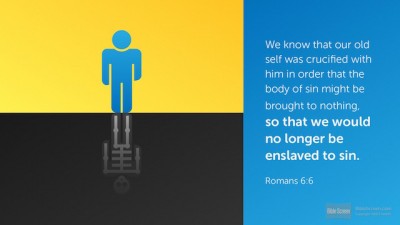
Romans 6:6-11—Knowing this, that our old man is crucified with him, that the body of sin might be destroyed, that henceforth we should not serve sin. 7 For he that is dead is freed from sin. 8 Now if we be dead with Christ, we believe that we shall also live with him: 9 Knowing that Christ being raised from the dead dieth no more; death hath no more dominion over him. 10 For in that he died, he died unto sin once: but in that he liveth, he liveth unto God. 11 Likewise reckon ye also yourselves to be dead indeed unto sin, but alive unto God through Jesus Christ our Lord.

Continue reading WE CEASE FROM SIN BY…

JESUS CHRIST, THE CHIEF CORNERSTONE

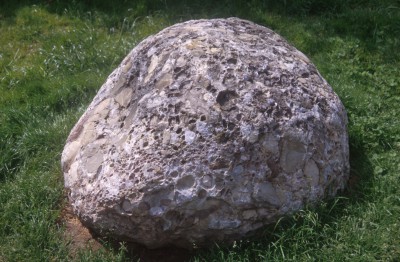
In Old Testament Israel the cornerstone of each building was the chief stone from which every single measurement of the entire building was made. The cornerstone itself must, of necessity, be perfectly formed with every corner and side at 90 degrees from all others.  The stone hewers were called stone squarers.  It had to be laid perfectly level on every side.  Any deviation in the form or arrangement of the cornerstone would be reflected in the entire building.

Continue reading JESUS CHRIST, THE CHIEF CORNERSTONE

ARE YOU A STUMBLINGBLOCK

“Thou shalt not curse the deaf, nor put a stumblingblock before the blind, but shalt fear thy God: I am the Lord” (Lev. 19:14).

Most normal people would never imagine such wickedness as to cause a blind man to fall, yet they may mock him. How many times have you seen someone who ridiculed a deaf person or others who were handicapped? Some may be like the children who mocked Elisha (2 Kings 2:23-24). Was it a sin for Elisha to curse those children? We are not told, but we can read clearly “Whoso causeth the righteous to go astray in an evil way, he shall fall himself into his own pit…” (Pro. 28:10).

Continue reading ARE YOU A STUMBLINGBLOCK

STONES OF THE TEMPLE

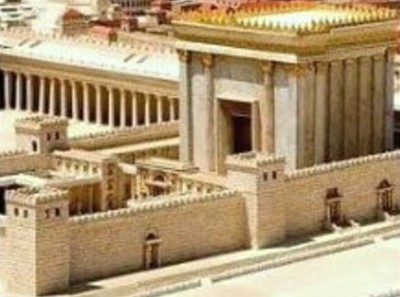
When a Bible student begins researching the life of King David, he will soon come to understand why the scriptures say David had a heart like God’s own heart. “…I have found David the son of Jesse, a man after mine own heart, which shall fulfil all my will” (Acts 13:22b). David never showed jealousy for others’ glory. He knew he was king of Israel, even while Saul lived, but he did not try to usurp Saul’s authority. Many times he had the opportunity to kill Saul, but he did not lift his hand against him (1 Sam. 24:5; 1 Sam. 26:11-23). When Saul and Jonathan died, King David wept bitterly and mourned their loss (2 Sam. 1:19-27). When he finally came to power, David determined that he would build a “house” for the Lord, a place for the Lord to dwell in Israel (2 Sam. 7:2 and 2 Samuel 7:7). However, the Lord told him no, because his hands had shed blood. Was he daunted? What was his reaction? We see that David made preparation for the temple even though he knew he would not be the one to actually build it.

Continue reading STONES OF THE TEMPLE